


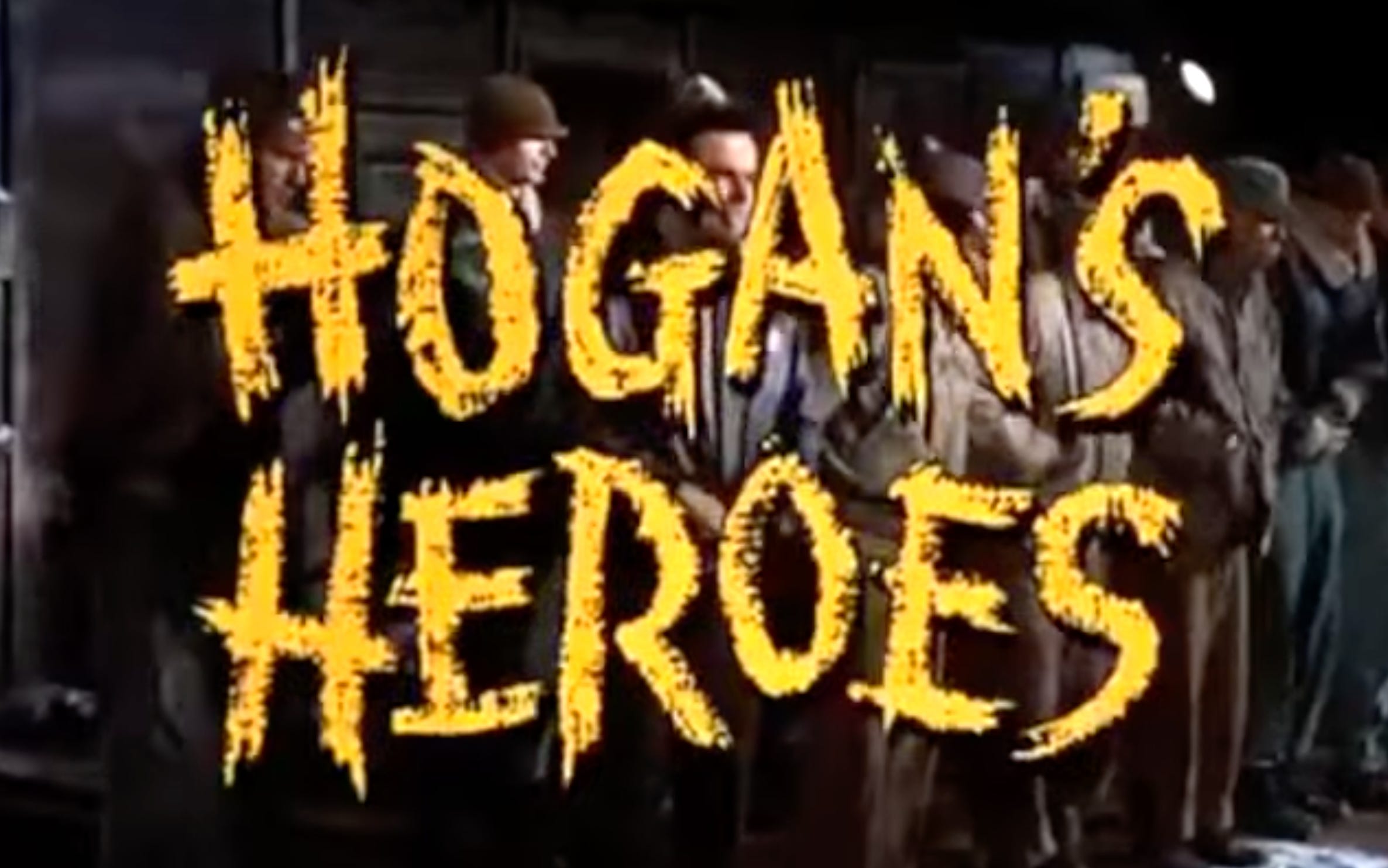
My father, a man forged in the crucible of World War II, carried the memory of that conflict throughout his life. He had crossed the Atlantic, fought his way through France, and saw firsthand the horrors of a world engulfed in war. He was a man who understood the gravity of sacrifice, the bitter taste of loss, and the unwavering courage it took to face an enemy determined to conquer. Yet, for all the weight of his experiences, there was one particular television show that, to my adolescent amazement, always brought a smile to his face: Hogan’s Heroes.
To understand why this seemingly odd pairing worked, one must first understand my father. He wasn’t a man given to grand pronouncements or lengthy philosophical discussions about his wartime service. His memories were often held in quiet moments, in the way he meticulously maintained his yard, or in the occasional far-off look in his eyes when a certain sound or smell triggered a memory. He rarely spoke of the Germans with overt hatred, though there was a clear and unwavering understanding of who they were and what they represented in that global struggle.
So, when the opening credits of Hogan’s Heroes rolled, with its jaunty theme song and smirking prisoners, I would often question just how a man who had faced the genuine, brutal reality of German soldiers could find humor in a sitcom set in a POW camp. It felt, to my young mind, like a betrayal of his past.
But my father never flinched. He’d settle into his armchair, a faint smile already playing on his lips, ready for another dose of Colonel Hogan’s ingenious schemes and Colonel Klink’s cluelessness. He wasn’t laughing at the war itself, or at the suffering it entailed. He was laughing at the absurdity, at the lampooning of authority, and perhaps, at the sheer audacity of the premise.
Hogan’s Heroes, which aired from 1965 to 1971, presented a highly fictionalized and sanitized version of a German POW camp. Stalag 13 was less a place of torment and more a bustling hub of Allied covert operations, complete with secret tunnels, hidden radios, and a surprisingly lenient set of German captors. Colonel Hogan, played with charming wit by Bob Crane, was the quintessential American hero – resourceful, brave, and always one step ahead. His foil, Colonel Klink, was a preening, self-important buffoon, more concerned with his spotless record than with the obvious shenanigans happening under his command. Sergeant Schultz, with his iconic “I know nothing! I see nothing! I hear nothing!” embodied a willful ignorance that allowed the plots to unfold.
As a real-life soldier, my father understood the stark difference between the show’s reality and the historical one. He knew that actual POW camps were not hotbeds of espionage and that German officers, while perhaps not all evil caricatures, were certainly not the bumbling fools depicted on screen. Yet, he found immense enjoyment in this deliberate distortion.
I believe part of the appeal lay in the catharsis of it all. For veterans like my father, the war was a period of intense stress, fear, and grim determination. Hogan’s Heroes offered a chance to revisit that setting, but through lighthearted comedy. It allowed him to laugh at the very forces that had once caused so much anguish, to strip them of their power through satire. Klink and Schultz, in their ineptitude, became symbols of a defeated enemy, made impotent and ridiculous. The show, in its own way, was a victory lap, a gentle mocking of the vanquished.
Moreover, the humor in Hogan’s Heroes often stemmed from the clash of cultures and the subversion of expectations. The “good guys” were always cleverer, always outsmarting their oppressors. This reinforced a belief in American ingenuity and spirit, even in the most improbable of circumstances. My father, who had been part of that winning team, likely appreciated this constant affirmation.
He also appreciated a good story and a well-executed joke. While the premise was outlandish, the writing was often sharp, and the actors' comedic timing was impeccable. My father recognized talent, and he saw it in the way these actors brought their characters to life, making them genuinely funny despite their uniforms.
There was also a subtle acknowledgment within the show that not all Germans were fanatical Nazis. Klink and Schultz, while antagonists, were never truly malicious. They were simply trying to do their jobs, albeit poorly. This nuanced portrayal, however thin, might have resonated with my father’s own experiences, which I suspect were far more complex than the simple black-and-white narratives of the war. He knew that the enemy was not a monolith, even if the ideology they served was unequivocally evil.
As I grew older and gained a deeper understanding of history and human nature, my own appreciation for Hogan’s Heroes evolved. I began to see it not as a flippant disregard for history, but as a cultural artifact born from a specific post-war moment. It allowed a generation that had lived through unimaginable darkness to find a sliver of light, a reason to smile, in the very shadow of their past.
It is often said that a show like Hogan’s Heroes could never be made today. Symbols of Nazi Germany are strictly 'verboten' in our modern lexicon, and any attempt to mine that era for humor would likely be met with swift, uncompromising backlash. But was Hogan truly a hero? To my father, the show was more than a silly sitcom; it was a quiet, comforting balm for a soul that had seen too much—a necessary reminder that even in the darkest reaches of history, there is still room for a defiant laugh.