

Sorting Out 1976
The Bicentennial in the Rearview, Part 6 (No. 105)

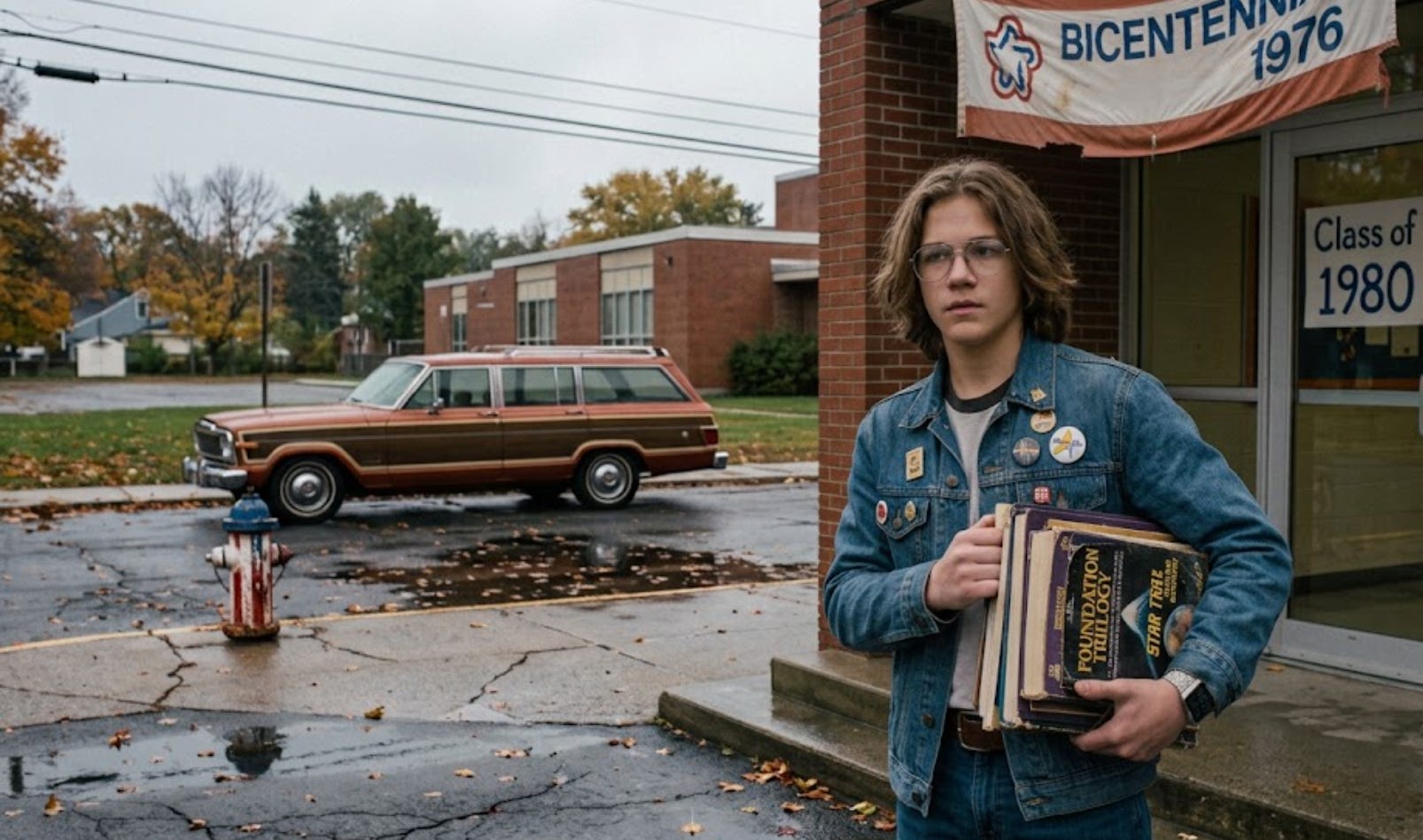
I wrap up my retrospective on the Bicentennial year of 1976 with this sixth and final installment, looking back to capture the overall feeling, the spirit, and the distinct aesthetic of a time caught between eras.
For me, 1976 was a year of profound personal transition, marked by the milestone of “graduating” from the (literally) claustrophobic halls of junior high to the uncharted territory of high school. I can’t say I was especially excited about the move, but I assumed it had to be better than the living nightmare of junior high. I think the country harbored a similar outlook. We were collectively emerging from a dark, exhausting decade—bruised by Watergate, hollowed out by Vietnam, and squeezed by stagflation. The Bicentennial was a birthday party, but it was also an eviction notice for the ghosts of the early ‘70s. We didn’t know whether what was coming next would be great, but it had to be better than what we were leaving behind.
The vibe of 1976 was a fascinating, paradoxical blend of forced patriotism and deep-seated cynicism. On the surface, everything was wrapped in red, white, and blue bunting. Freedom Trains crisscrossed the nation, and Uncle Sam imagery was plastered onto everything from soda cans to fire hydrants. But beneath that engineered optimism lay a beautiful, organic aesthetic that felt entirely grounded in the earth.
The color palette of the real world wasn’t a patriotic red, white, and blue; it was defined by harvest gold, avocado green, and deep, rusted ochre. Life felt textured—heavy corduroy, wood-paneled station wagons, and the tactile click of an 8-track tape sliding into a car deck. The air smelled of leaded gasoline, incense, and Avon cologne from collectible decanters.
That duality extended to the culture we consumed. Turn on the television or walk into a theater, and you were met with a landscape that was atmospheric, moody, and surprisingly mature. The glossy, hyper-polished Hollywood of the coming decades hadn’t arrived yet. Instead, we had the gritty realism of late-night talk shows with hosts and guests alike puffing on cigarettes between segments, the lingering shadows of neo-noirs, and music that was shifting from the grand, stadium-rock anthems of the era to something more stripped-down, yearning, and honest. It was a time when the landscape itself—rugged, unvarnished, and vast—served as the backdrop for our national anxieties and personal reinventions.
By the time the autumn leaves began to turn and I finally walked through the doors of high school, the patriotic banners had already begun to fade and fray. The grand spectacle of the Bicentennial was waning, leaving us to figure out who we actually were in the quiet gray of a post-Labor Day Tuesday morning. We had survived the nightmare of our immediate past, only to wake up to an undetermined future.
As the needle dropped on a new groove—both for a teenager stepping into a brand-new hallway and a country looking toward a new President—we stepped forward into the cool, uncertain light, hoping the road ahead would finally smooth out. But, of course, both roads remained bumpy. High school brought new opportunities for alienation and heartbreak. And the Carter administration brought shortages, military failures, and paralyzing stagflation. It was still going to take a few years for both me and the country to sort things out.