

Small Wisdom
The Lost Art of Condensing (No. 96)

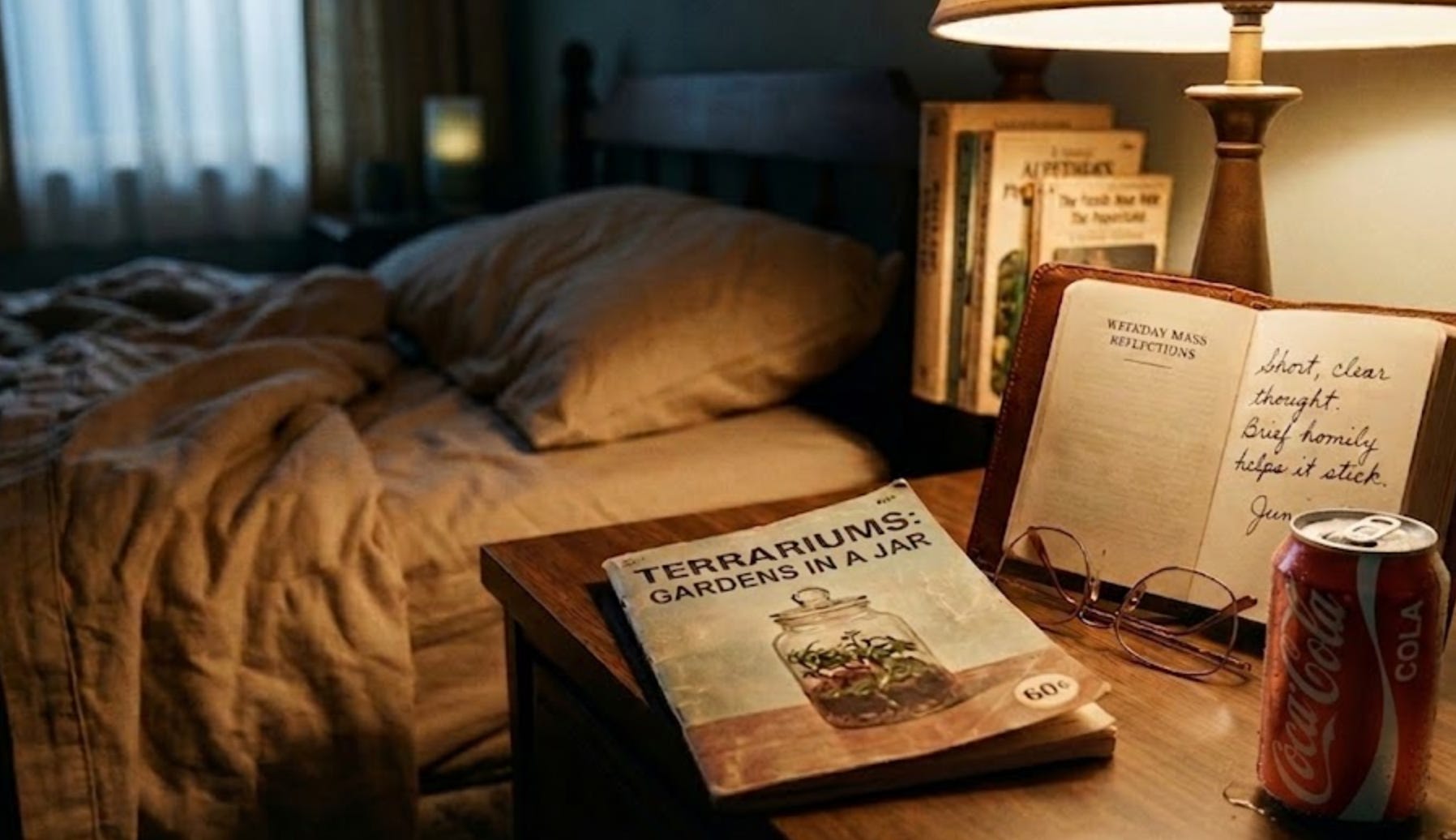
Miniature books were a staple item at grocery store registers in the 1970s. I don’t mean paperbacks, though you might sometimes find them there as well. I’m talking about the roughly 3-inch-by-5-inch booklets comprising seventy or eighty pages that offered practical little reads on topics ranging from macramé to home finances. These sold for fifty or sixty cents and were, along with chewing gum and candy bars, a definite impulse purchase. I acquired a few of them during my youth—one on creating a terrarium comes immediately to mind—and there was something pleasing about the way they delivered exactly what they promised: a focused, digestible slice of knowledge you could finish before bedtime that night.
I’m not sure exactly when the market for such tiny books evaporated. Sometime in the eighties or nineties, I suspect, as information began migrating to other formats. But in the world of the internet and instant access to these sorts of informational gems, it’s easy to see how they ultimately fell out of favor. Why pay 60 cents (the equivalent of $3.50 today) for a booklet on macramé when a 30-second search yields 10 tutorials, 6 videos, and a Reddit thread arguing over the proper knot?
But those little books weren’t the only condensed nuggets of knowledge I was exposed to as a kid. As a student at Immaculate Conception Elementary School, I attended Mass every school day. These services were otherwise identical to the Sunday Mass, with one important distinction. While the homily—the sermon delivered by the priest—typically ran twenty minutes or so on Sundays, the weekday version was significantly shorter, usually five minutes or less. The priest distilled the lesson of the scripture into a single, simple thought for the day and left it at that. For kids aged seven, eight, or nine, these brief homilies were far more accessible than a detailed textual analysis, and I’d argue they were often more memorable for their brevity. A short, well-chosen idea has room to rattle around in your head. A long one tends to crowd itself out.
What these two things—the grocery store booklet and the weekday homily—had in common was a kind of intellectual discipline: the willingness to decide what matters most and leave the rest on the cutting room floor. There’s real skill in that kind of compression. Anyone can be thorough. It takes genuine understanding to be brief.
We don’t seem to value that skill much anymore, or at least we don’t reward it. Streaming series run ten episodes when three would do. Meetings are scheduled for an hour by default. Articles are padded with “keywords” for SEO. Even our text messages come with the three little dots, promising more to follow. We’ve confused volume with value, and we’re all a little worse off for it.
Maybe it’s time to bring back the three-by-five booklet. Or at the very least, recognize what it knew about making a point and moving on.
Love this. Have to read it again, and maybe a third time when i'm not pressed for time. I remember these tiny books well.
Thanks, John.